

Bobby Moore Fund

Bowel cancer is relentless. But so are we.
Bobby Moore was just 51 years old when he died. Shortly after his death in 1993, Bobby’s widow Stephanie Moore OBE set up the Bobby Moore Fund as a restricted fund of Cancer Research UK to raise money for pioneering bowel cancer research.
Since Bobby’s death, thanks to the generosity of our supporters we’ve raised more than £30m and seen mortality rates for bowel cancer fall by more than 30%.
However, with 46 people losing their life to the disease every day in the UK, we still have a long way to go.
Only through research will we find better ways to prevent, detect, diagnose and treat bowel cancer.
It's time to tackle bowel cancer
In the 30 years since the Bobby Moore Fund was set up, we've come so far. And together we will go much further.
Play your part by donating to our life-saving research today.

Football Shirt Friday
Football Shirt Friday takes place in April, which is Bowel Cancer Awareness Month.
Get your workplace, school or friends and family together to wear a football shirt, share a selfie on social media and donate to help tackle bowel cancer.
About bowel cancer

Bowel cancer is the second most common cause of cancer death in the UK. There are around 16,800 bowel cancer deaths in the UK every year. That's 46 every day - more than four football teams.

There are around 43,000 new bowel cancer cases in the UK every year. We know that 54% of these cases are preventable and so we aim to raise awareness of healthy lifestyle factors, such as giving up smoking and eating less red and processed meat.

It's crucial to spot bowel cancer early. The great news is that if bowel cancer is detected at the earliest stage, more than nine out of ten patients will survive the disease for more than five years. As well as raising awareness of signs and symptoms, we aim to increase bowel cancer screening uptake across the UK, while promoting informed consent.
Research we fund

BMF helps to fund Cancer Research UK’s cutting-edge bowel cancer research projects. For example, our team in Leeds are building a huge collection of high-quality bowel cancer data from the across UK. They’re analysing the data to help them identify and reduce inequalities in care, and find ways to improve survival.
In Oxford, our researchers are taking an in-depth look at how errors in genes linked to bowel cancer could lead to an increased risk of the disease. Understanding more about these genes could help researchers find new ways to tackle bowel cancer in the future.
Our researchers in Belfast are studying how bowel cancer hijacks normal processes our body’s cells use to make energy and grow. This hijacking can help cancers resist chemotherapy, making treatment less effective. They’re aiming to help find ways to predict who might not respond to chemotherapy and develop new ways to treat these people.
London Celebrity Sports Quiz

The London Celebrity Sports Quiz is back, on Thursday 2 November 2023 at The Brewery! Once again, we’re bringing together famous faces from across the sporting world to support The Bobby Moore Fund’s pioneering bowel cancer research.
Join us for a special instalment of the UK’s largest interactive sports quiz to celebrate 30 years of the Bobby Moore Fund. With quiz rounds written by the legendary Clive Tyldesley and hosted by celebrity quizmasters, we’re set for another incredible evening of testing sports trivia and entertainment. Who will take the Championship title and walk away with the coveted Sports Quiz trophy?
Sports challenges
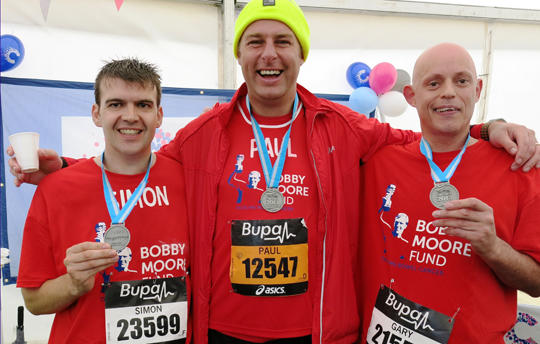
Join the Bobby Moore Fund team and take on all kinds of exciting sports challenges!
- Click the link below
- Select the event that's right for you
- Make sure you specify that you're completing a challenge for Bobby and join team BMF!
Moore on Twitter
Moore To Know

We've teamed up with the England Footballers Foundation to raise awareness of bowel cancer, highlight its symptoms, and help educate on ways to prevent against the disease.
Join us on Facebook
Like our page on Facebook to be the first to know what the Bobby Moore Fund team are up to!
Contact information
For more information about how you can support the Bobby Moore Fund, please email or call our team.
Email: bobbymoorefund@cancer.org.uk
Phone: 0300 1231022
Thank you from Stephanie Moore OBE

Your support over the years has enabled the Bobby Moore Fund for Cancer Research UK to raise over £29 million to date for life-saving bowel cancer research. I am very pleased to say that real progress has been made since Bobby died of the disease and the contribution of our supporters has been fundamental to achieving this.
There is still so much more to do and I hope you continue to support the Bobby Moore Fund.